
Life Cycle Assessment (LCA): Measuring True Environmental Impact
Understanding the Full Environmental Story
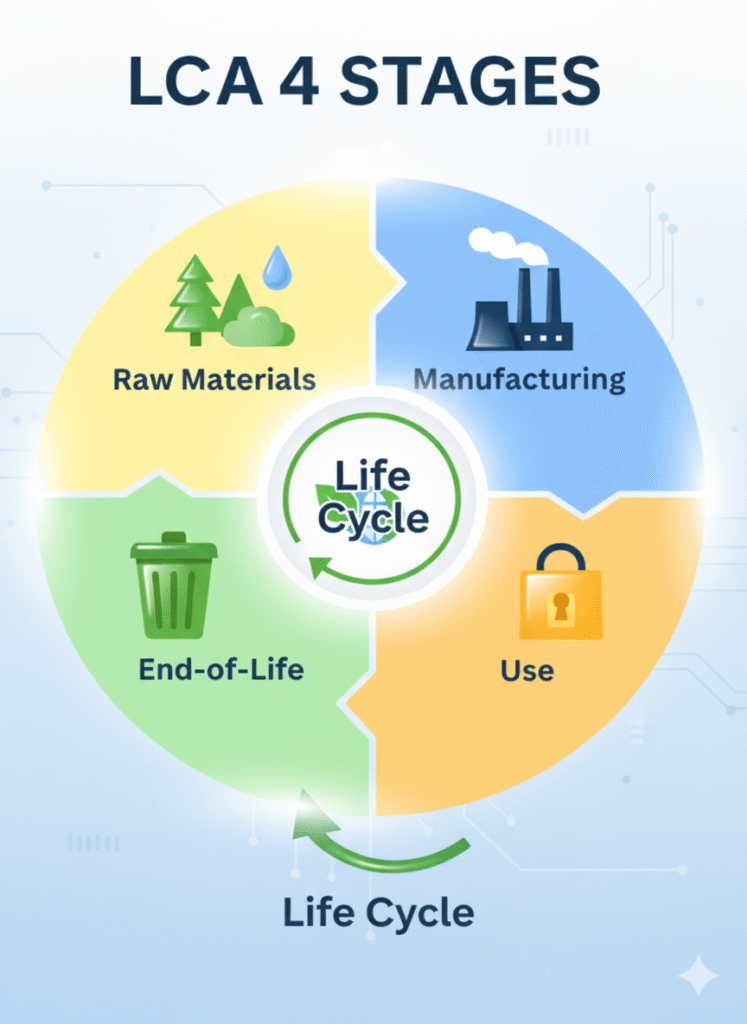
In an era where sustainability claims must be backed by verifiable data, Life Cycle Assessment (LCA) has emerged as the gold standard for measuring environmental impact with scientific rigor. Unlike superficial green marketing or single-metric evaluations, LCA provides a comprehensive, cradle-to-grave analysis that traces every environmental consequence of a product or service throughout its entire existence. This holistic methodology examines the complete journey—from the extraction of raw materials from the earth, through manufacturing processes and transportation networks, into the hands of consumers during the use phase, and finally through disposal, recycling, or regeneration at end-of-life. By quantifying impacts across multiple environmental indicators including carbon emissions, water consumption, energy use, ecosystem degradation, and waste generation, LCA reveals the true environmental cost of business operations with unprecedented clarity.
Unlocking Strategic Sustainability Insights
The power of LCA lies not merely in measurement, but in the actionable intelligence it generates for strategic decision-making. Through systematic analysis, businesses can identify environmental hotspots—those specific stages, materials, or processes that contribute disproportionately to overall impact. These insights enable targeted interventions that deliver maximum environmental benefit with optimal resource allocation, whether that means switching to lower-impact materials, redesigning manufacturing processes, optimizing logistics networks, or extending product lifespans through improved durability. Beyond identifying problems, LCA empowers organizations to evaluate alternatives before committing to costly investments, comparing different design options, supply chain configurations, or technology choices with confidence that decisions are grounded in comprehensive data rather than assumptions or incomplete information.
Aligning with UAE and GCC Sustainability Leadership
The United Arab Emirates and broader GCC region have positioned themselves at the forefront of the global sustainability transition, establishing ambitious national strategies that demand measurable progress toward low-carbon economies. The UAE’s Net Zero by 2050 Strategic Initiative, Saudi Arabia’s Vision 2030, and regional commitments to circular economy principles create both regulatory requirements and competitive imperatives for businesses to demonstrate genuine environmental stewardship. LCA serves as an essential tool for organizations seeking to align with these national priorities, providing the documentation necessary for green product labeling schemes, supporting carbon reduction commitments, and demonstrating compliance with emerging environmental regulations. As government procurement increasingly favors verified sustainable products and international trade partners demand environmental transparency, LCA becomes not just an environmental tool but a business enablement strategy that opens market access and strengthens competitive positioning.
Advancing Circular Economy and Resource Efficiency
The circular economy model—which seeks to eliminate waste by keeping materials in productive use—requires detailed understanding of material flows and environmental trade-offs that only LCA can provide. By mapping where materials come from, how they’re transformed, and where they end up, LCA identifies opportunities to close loops, substitute virgin resources with recycled alternatives, and design products for disassembly and regeneration. This systems-level perspective reveals hidden interdependencies and unintended consequences, preventing the common pitfall of solving one environmental problem while inadvertently creating another. For manufacturers in the GCC seeking to reduce dependence on imported materials, minimize waste sent to landfills, and participate in emerging secondary material markets, LCA provides the analytical foundation for transitioning from linear “take-make-dispose” models to regenerative systems that create value from what was previously considered waste.
Building Credibility and Stakeholder Trust
In a marketplace increasingly skeptical of unsubstantiated environmental claims, LCA provides the third-party verifiable evidence that distinguishes genuine sustainability leadership from greenwashing. Investors incorporating ESG criteria into decision-making, corporate customers with supply chain sustainability requirements, government entities implementing green procurement policies, and increasingly environmentally-conscious consumers all demand transparency backed by credible data. LCA studies conducted according to international standards such as ISO 14040 and ISO 14044 provide this credibility, enabling businesses to communicate environmental performance with confidence and defend against accusations of misleading marketing. This transparency builds trust with stakeholders, differentiates brands in competitive markets, and protects reputation in an environment where environmental missteps can trigger significant reputational and financial consequences.
Partnering with Barz Group for LCA Excellence
Implementing effective LCA requires specialized expertise that spans environmental science, industrial engineering, data analysis, and regulatory knowledge—capabilities that most organizations cannot economically develop in-house. Barz Group brings this multidisciplinary expertise to organizations across the UAE and GCC, offering end-to-end LCA services that transform environmental assessment from a compliance burden into a strategic advantage. Our team guides clients through every phase of the LCA process, from defining study scope and boundaries through data collection and modeling to impact interpretation and strategic recommendations. We employ advanced LCA software platforms and comprehensive environmental databases that ensure accuracy and alignment with international methodologies, while our deep understanding of regional industries, supply chains, and regulatory contexts ensures relevance to local business realities.
Beyond standalone assessments, Barz Group integrates LCA into broader organizational processes including eco-design, product development, supply chain optimization, and corporate sustainability strategy. Our material flow analysis capabilities map resource movements through operations with precision, identifying inefficiencies and opportunities that would otherwise remain invisible. We work collaboratively with engineering, procurement, and operations teams to translate LCA findings into practical improvements that deliver measurable environmental and economic benefits. Whether your organization seeks to achieve carbon neutrality, comply with emerging product environmental footprint regulations, differentiate products through verified environmental superiority, or simply understand and reduce your environmental impact, Barz Group provides the expertise, tools, and ongoing support to turn sustainability ambitions into documented achievements.
Future-Proofing Through Environmental Intelligence
As environmental regulations tighten, investor scrutiny intensifies, and market preferences shift toward sustainable products, the ability to measure, manage, and communicate environmental performance becomes increasingly critical to business viability. Organizations that develop LCA capabilities today position themselves to navigate this evolving landscape with agility, turning potential compliance challenges into competitive advantages. The data generated through LCA creates institutional knowledge about environmental performance that informs innovation, guides capital allocation, and supports strategic planning across timeframes. By partnering with Barz Group to embed LCA into your operational and strategic processes, your organization gains not just compliance with today’s requirements, but the analytical foundation to lead in tomorrow’s sustainability-driven economy—where environmental performance is inseparable from business performance, and data-driven sustainability decisions determine market leaders and laggards.

