
See Your Software.
Touch Your Software —
Before It's Built.
Introducing ProtoClarity: The Better Way to Build Software.
Imagine if, before spending a single dirham on development, you could truly
experience your software instead of just reading about it.
Actually USE Your Software
Not imagine it. Not read about it. Click through it. Fill out forms. Navigate menus. Complete transactions. Experience every workflow exactly as it will work.
Get Everyone on the Same Page
Your CEO, your operations manager, your IT team, your end users—everyone clicks through the same interactive prototype. No more misunderstandings. No more “I thought it would work differently.”
See the Complete Blueprint
Developers get crystal-clear technical architecture: complete database designs, system diagrams, and specifications with zero ambiguity.
The Software Industry’s Dirty Secret
Most software projects don’t fail because of bad developers. They fail because no one truly understood what needed to be built.
- 68% of projects fail or disappoint.
- Average projects go 45% over budget.
- 70% of waste comes from poor requirements.
ProtoClarity fixes the real problem: communication between business and development.
Simple, fast, and crystal clear.
In four focused weeks, you go from fuzzy idea to interactive prototype and full technical blueprint that developers can execute on without guesswork.
-
For Business OwnersWe understand your world
- What problems are you trying to solve?
- What does success look like for your business?
- Who will use this software and how?
- What makes you lose sleep about this project?
For Software CompaniesWe clarify the full scope- Extract every requirement from the client.
- Identify gaps and risks early.
- Map out complete user journeys.
- Define technical scope clearly.
Result: Everyone shares a clear, aligned vision of what needs to be built. -
For Business OwnersUse it before you build it
- Click buttons and see what happens.
- Fill out forms with real validation.
- Navigate complete workflows end to end.
- Test on laptop, tablet, and phone.
- See how different user roles experience it.
- Try to break it and see error messages.
For Software CompaniesA specification clients can’t ignore- No more “can you explain this requirement again?”
- Clients see and approve real interactions.
- Scope gets locked with clear sign-off.
- Proposals become undeniable with working demos.
Result: Everyone experiences the exact same product before a single line of code is written. -
For Business OwnersYou test it with your people
- Run sessions with executives and managers.
- Involve actual end users early.
- Bring in your IT team for validation.
- We refine, you test, we refine again.
For Software CompaniesClients validate everything up front- User acceptance happens before development.
- Technical team reviews architecture together.
- Stakeholders sign off with confidence.
- Scope is locked with zero ambiguity.
Result: Zero surprises at launch. Everyone approved what they actually experienced. -
For Business OwnersA roadmap your team can trust
- The interactive prototype as the north star.
- Complete technical documentation.
- Validated requirements with zero questions.
- A clear roadmap to build exactly what you approved.
For Software CompaniesDevelopers move straight into execution- Prototype-linked user stories.
- Database migration scripts.
- UML diagrams for every component.
- Acceptance criteria for every feature.
- Technical specs with zero ambiguity.
Result: Development becomes execution, not exploration—fewer meetings, faster delivery.
The value of prototyping before development
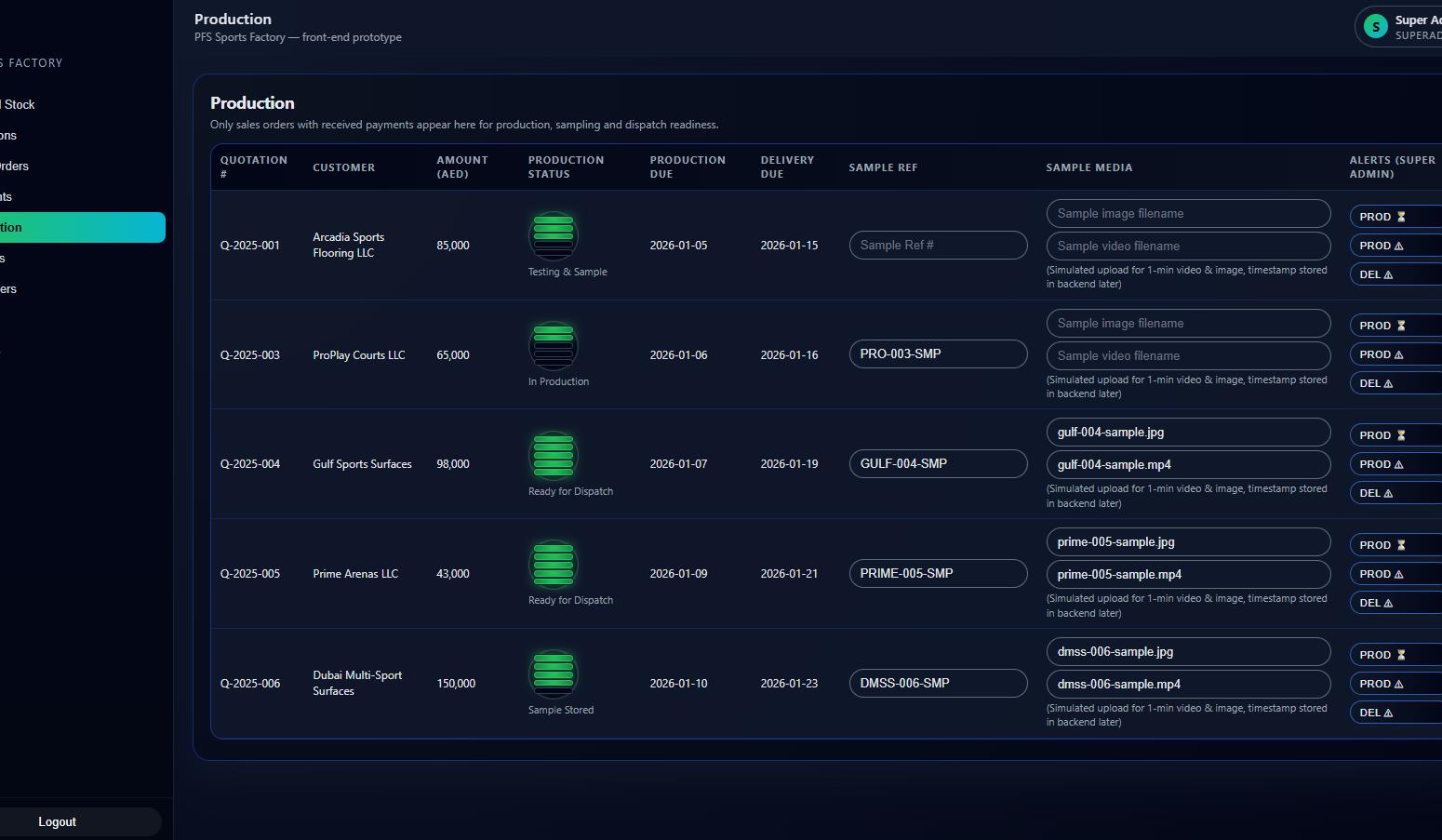
In ProtoClarity, a clickable prototype often exposes the gap between what a client says and what they truly need. One “simple” sentence — “reduce material when confirmed, restore when cancelled” — sounded straightforward, but once we visualized the flow, the real requirements surfaced: automatic stock reservation, product-to-quotation linking, and accurate quantity tracking across the entire process.
When we walked through the prototype together, business users immediately saw the complete picture: quantities moving automatically between quotations and material stock — without manual intervention or spreadsheet workarounds. That single 30-minute session prevented weeks of rework, expensive change requests, and scope disputes during development.
The developer didn’t receive assumptions — they received a validated specification built directly from what users had already seen, tested, and approved. ProtoClarity turns ambiguity into clarity before a single line of code is written.
Cost & timeline impact: ProtoClarity vs. “build-first” projects
ProtoClarity turns unclear requirements into a clickable, validated specification. That reduces rework, change requests, approval loops, and integration surprises — the places projects usually lose money and time.
Cost drivers (relative index)
How budgets inflate when workflows are clarified during development instead of before it.
Timeline drivers (relative index)
Where schedules slip when approval and edge-cases are discovered late in development, after implementation begins.
What this means for software companies
- Stronger proposals: you sell a validated scope, not “estimated requirements”.
- Less rework: workflows, states, and exceptions are confirmed in a prototype.
- Fewer disputes: sign-off happens on what users actually experienced.
- Faster delivery: fewer approval loops, fewer QA cycles, fewer mid-build pivots.

