
Why Air Quality Monitoring Is Now a Mandatory Governance Priority
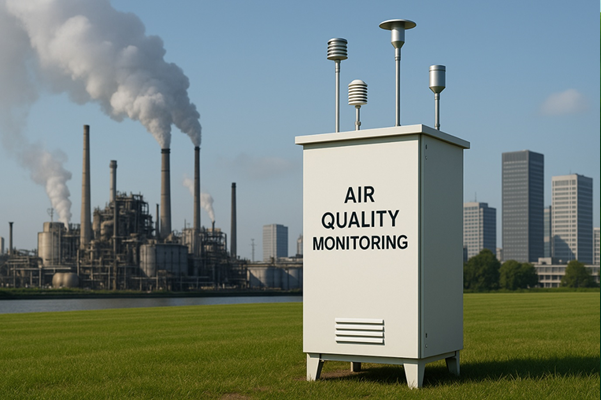
Air quality is no longer a purely technical or environmental issue. It has moved decisively into the boardroom. Today, air quality monitoring sits at the intersection of governance, risk management, regulatory compliance, and corporate credibility. Organizations that still treat it as a secondary HSE task are already behind the curve.
This shift is structural, not temporary.
—
From Environmental Metric to Governance Obligation
Historically, air quality monitoring focused on compliance—meeting permit conditions, responding to inspections, and avoiding penalties. That mindset is obsolete.
Air emissions now directly influence:
· Governance accountability under ESG, CSRD, and emerging assurance requirements
· Operational risk exposure, including shutdowns, fines, and reputational damage
· Workforce health and productivity, particularly in industrial and urban settings
· Investor confidence, as air pollution is increasingly scrutinized under environmental and social risk lenses
In governance terms, unmanaged air quality equals unmanaged risk.
—
Regulatory Pressure Is Intensifying—Fast
Across jurisdictions, regulators are tightening ambient and occupational air quality expectations. What’s changed is not just the limits—but the expectation of continuous oversight.
Authorities and frameworks now expect organizations to demonstrate:
· Proactive monitoring, not reactive sampling
· Data traceability and audit-ready records
· Clear escalation pathways when limits are exceeded
· Integration of air data into management review and decision-making
Static reports and ad-hoc measurements no longer meet the governance threshold.
—
ESG, CSRD, and the Assurance Reality Check
Air quality data is increasingly feeding directly into:
· Environmental KPIs
· Health & safety indicators
· Community impact disclosures
· Double materiality assessments
Under CSRD and similar frameworks, companies must not only report impacts but prove control systems are in place. Weak air monitoring systems are red flags during assurance reviews—especially where emissions affect workers, nearby communities, or sensitive environments.
In short: if you cannot monitor it robustly, you cannot govern it credibly.
—
Air Quality Is a Workforce and Social Risk Issue
Fine particulate matter (PM₂.₅, PM₁₀), NO₂, SO₂, VOCs, and ozone are no longer abstract pollutants. They translate into:
· Increased sick leave and long-term health claims
· Higher insurance and liability exposure
· Lower productivity and morale
· Community opposition and loss of social license to operate
Forward-looking organizations treat air quality monitoring as a people-protection system, not just an environmental control.
—
Data-Driven Governance Beats Paper Compliance
Leading organizations are shifting from checklist compliance to real-time intelligence:
· Continuous or semi-continuous monitoring systems
· Automated exceedance alerts
· Trend analysis linked to operational activities
· Dashboards that senior management actually use
This enables faster decisions, defensible actions, and clear accountability—hallmarks of mature governance.
—
What “Good” Looks Like Now
From a governance perspective, effective air quality management includes:
· Defined monitoring strategy aligned with regulatory and ESG needs
· Clear ownership at management level
· Integrated data flows into ESG, HSE, and risk dashboards
· Regular review against legal limits, internal thresholds, and best practice benchmarks
Anything less exposes the organization to avoidable risk.
—
The Strategic Bottom Line
Air quality monitoring has crossed a critical threshold. It is no longer optional, technical, or siloed. It is a governance priority with direct implications for compliance, assurance, reputation, and long-term value.
Organizations that recognize this early will operate with confidence. Those that delay will be forced to react—under pressure, scrutiny, and cost.
The direction of travel is clear. The only question is whether governance frameworks are keeping up.

