
WHY EVERY BUSINESS NEEDS A CORPORATE CLIMATE STRATEGY NOW
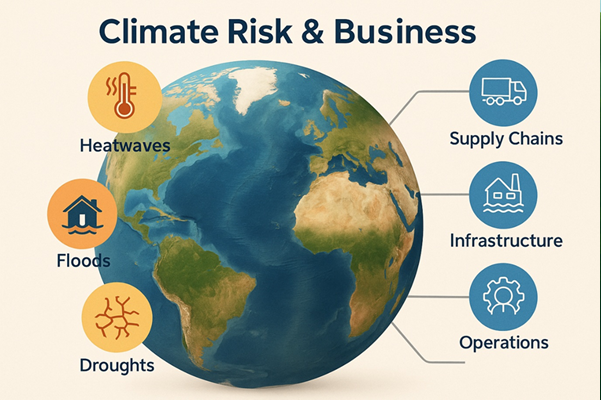
Businesses across all sectors are navigating unprecedented pressure to articulate and operationalize credible climate strategies—not merely to satisfy compliance checkpoints, but to safeguard long-term viability. Escalating physical risks—flooding, heatwaves, droughts—combined with accelerating regulatory demands and rising stakeholder scrutiny are transforming climate action from a sustainability initiative into a core business imperative. A mature climate strategy positions organizations to remain resilient, competitive, and trusted in a rapidly shifting operating environment.
Climate Risk Is Now a Direct Business Risk
Extreme weather damaging assets, supply chain interruptions, and escalating insurance premiums are no longer hypothetical. These impacts are already eroding margins and destabilizing operations. Organizations that fail to proactively identify, quantify, and mitigate climate-related risks expose themselves to higher operating costs, chronic disruptions, and reputational fallout. Protecting business continuity increasingly hinges on effective climate-risk governance.
Regulation Is Driving Radical Transparency
Global regulators—most notably in the EU and U.S.—are tightening disclosure expectations. Frameworks such as the Corporate Sustainability Reporting Directive (CSRD) require
companies to publicly detail climate risks, impacts, and transition pathways. Simultaneously, management system standards such as ISO 9001, ISO 14001, and ISO 45001 embed climate risk considerations into core operational processes and supply-chain oversight.
Investors have shifted as well: they expect clear climate data, validated decarbonization targets, and evidence of execution—not empty commitments. Climate performance has become a material investment determinant.
The Strategic Upside: Climate Action as Competitive Advantage
Early movers are capturing tangible benefits—lower energy costs, stronger brand trust, operational agility, and diversified revenue streams. Green buildings, low-carbon materials, and circular business models increasingly demonstrate both environmental and financial ROI. Organizations that set science-based targets, measure full-spectrum emissions, and embed transition plans into enterprise strategy are not only managing risk—they are shaping market leadership in the low-carbon economy.
Five Pillars of a High-Impact Climate Strategy
1. Comprehensive GHG Inventory Full Scope 1, 2, and 3 accounting, supported by lifecycle assessments for accuracy and hotspot identification.
2. Science-Based Targets Emissions-reduction pathways aligned with SBTi to ensure credibility and alignment with global climate trajectories.
3. Execution Roadmap Clear milestones, capital allocations, and accountability structures that hard-wire climate ambition into operations.
4. Robust Climate Governance Board-level ownership, integrated risk management, and incentive structures that reinforce climate outcomes.
5. Transparent Reporting Consistent, stakeholder-oriented disclosures leveraging global frameworks such as TCFD and GRI.
Across multi-jurisdictional operations, organizations must calibrate strategies to local regulatory, cultural, and market expectations.
UAE & GCC: A Region Accelerating Toward Climate Leadership
The UAE and GCC are elevating climate ambition through national commitments such as UAE Net Zero 2050 and Saudi Vision 2030. With mandatory ESG disclosures becoming standard and regional energy-sector decarbonization gaining momentum, companies in the region face heightened expectations—and a significant competitive runway. Those that invest
early in climate strategy, regional regulatory alignment, and decarbonization readiness will outperform as the sustainability landscape matures.

